Two million rental properties.
One deadline.
The EPC Band C 2030 deadline applies to all privately rented homes in England and Wales. This site — and the book behind it — explains how ratings are built, what actually moves them, and how to make the right decision for every property in your portfolio.
Written by a qualified energy assessor and landlord.
Why age is the starting point
The older the property, the lower the typical EPC rating. Most pre-1930 housing sits at Band E or below. Most post-2012 housing comfortably clears Band C. The compliance problem is concentrated in the middle of the century — cavity-wall terraces and semis built before insulation standards existed.
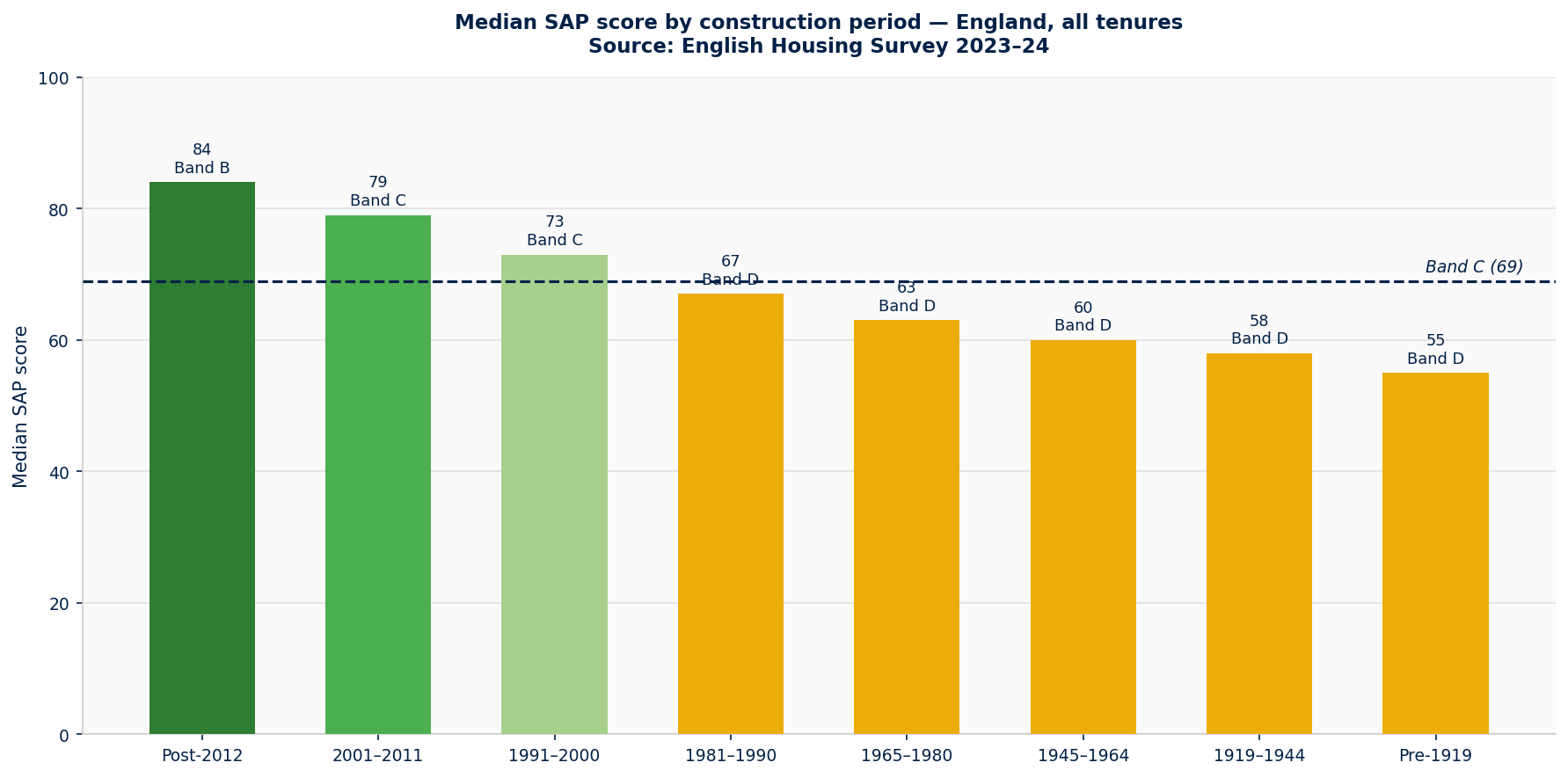
Median SAP score by construction era — England and Wales. Band C threshold (SAP 69) shown in orange. Source: English Housing Survey / EPC register analysis.
Construction age by energy band - from EPC Data
Age profile of properties within each energy band, the example shown for the postcode WR6 6HP in Worcestershire.
How exposed is your area?
The proportion of properties below Band C varies significantly by location — and so does the age profile that drives the cost of fixing them. Search your postcode to see what share of local rentals are below Band C, what the typical construction age profile looks like, and how many properties can realistically reach compliance with improvements.
Search your areaFrom data to decision
Landlord EPC compliance by 2030 means property-level decisions about construction type, improvement cost, and investment strategy. Understanding what to do — for your specific properties and your portfolio — is what the book is for.
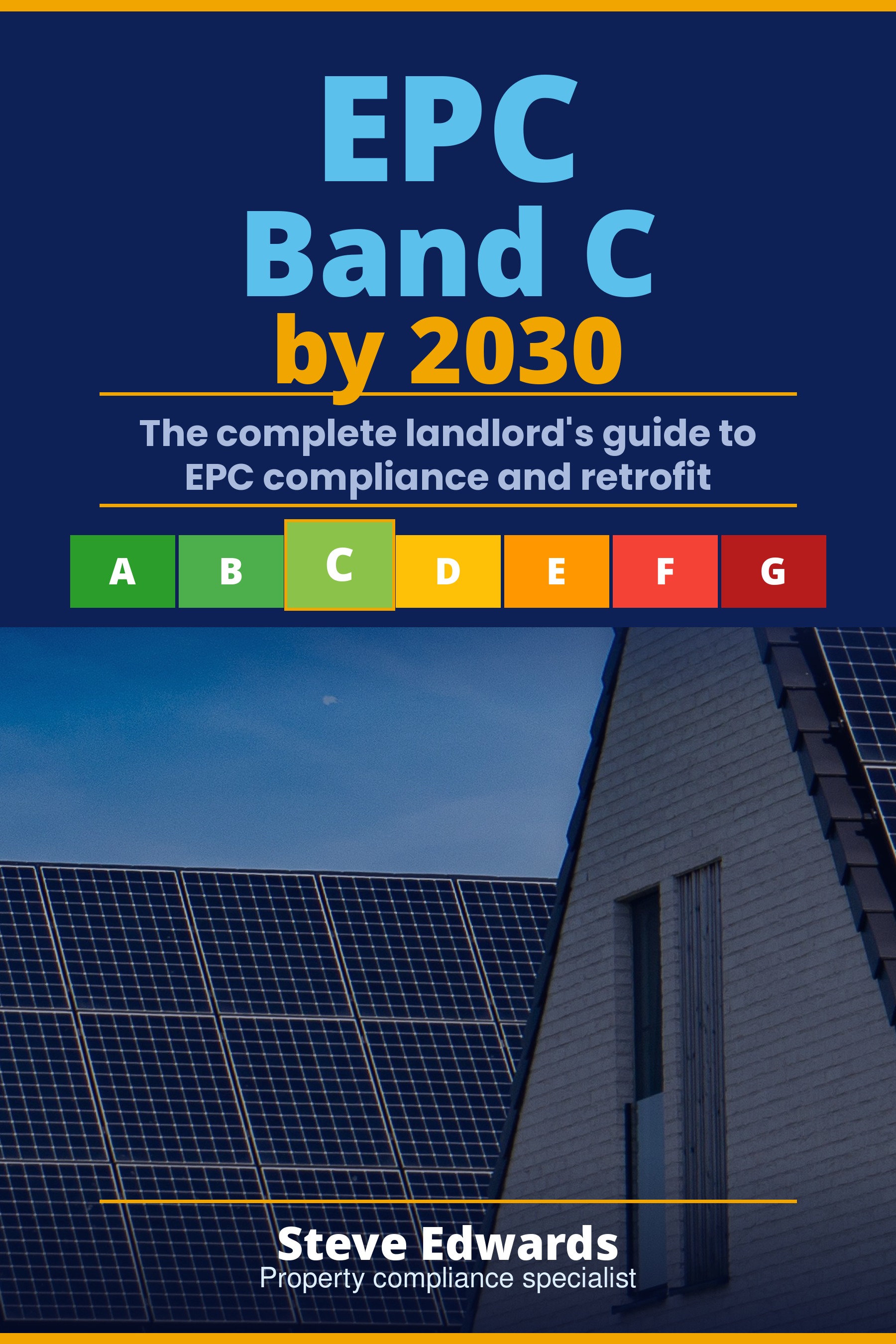
EPC Band C by 2030: A Landlord’s Guide to Ratings, Compliance, and Retrofit
27 chapters covering how EPC ratings are built, what each improvement actually delivers, how to navigate the 2030 compliance framework, and how to make the investment case for retrofit — or the case for selling. Practical, direct, and written for property investors with decisions to make.
Explore the landlord EPC guide